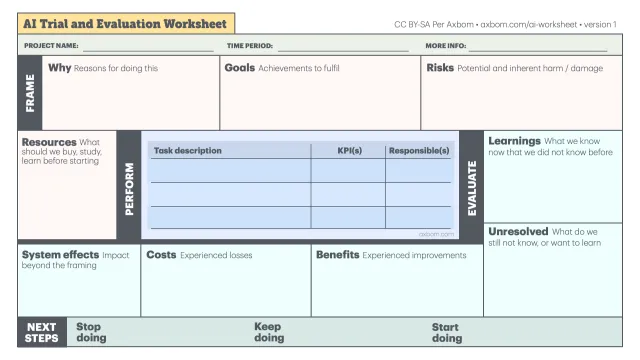
Template
Mini guide: Responding to comments about your company online
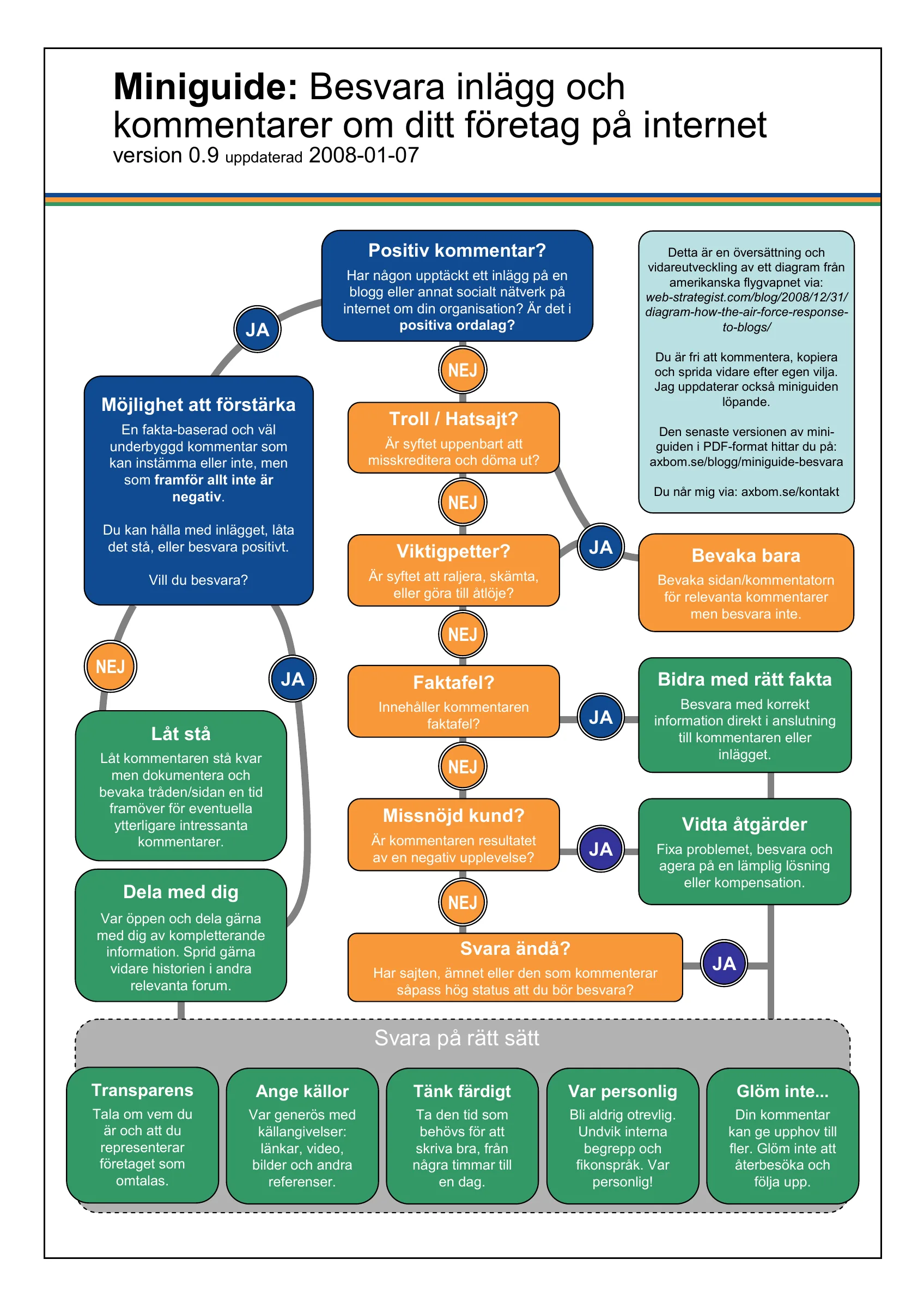
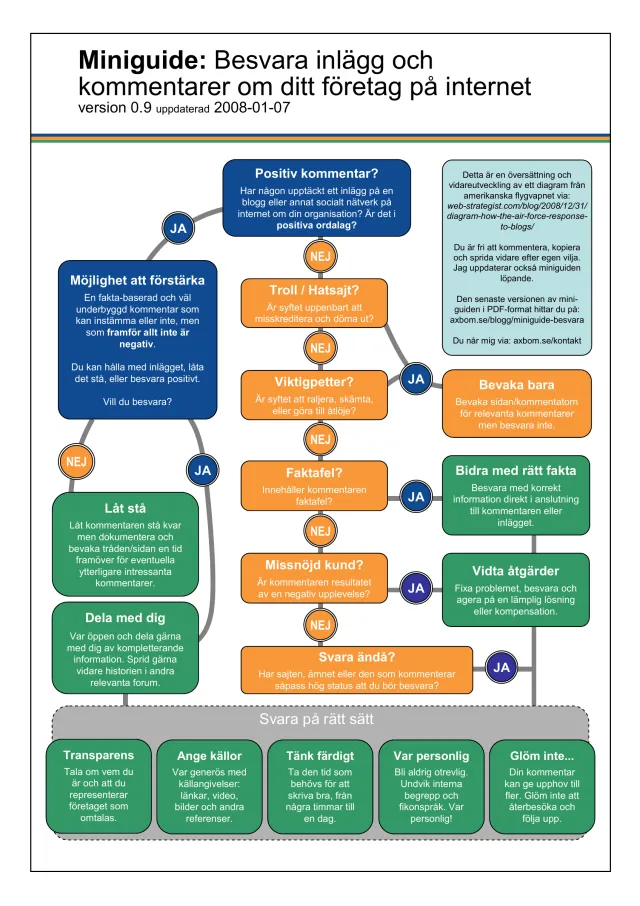
A one-page flowchart for how organizations can assess and respond to posts and comments about them online – from trolls and smart alecks to unhappy customers. Published on my blog in January 2009, free to use. The diagram is in Swedish.
Show moreShow less
- The diagram builds on a US Air Force action plan for assessing and responding to blog posts. I found it via Jeremiah Owyang, then translated and adapted it.
- The flow: if the comment is positive, there’s an opportunity to reinforce it. If not, the questions lead on – troll or hate site, smart aleck, factual errors, unhappy customer – to the right response: just monitor, provide the right facts, take action, or let the comment stand.
- At the bottom, five pieces of advice for responding the right way: be transparent, cite sources, think it through, be personal, and don’t forget to come back and follow up.
- Free to comment on, copy and share – and the diagram spread widely. Many organizations got in touch to ask whether they could use it in their own work.
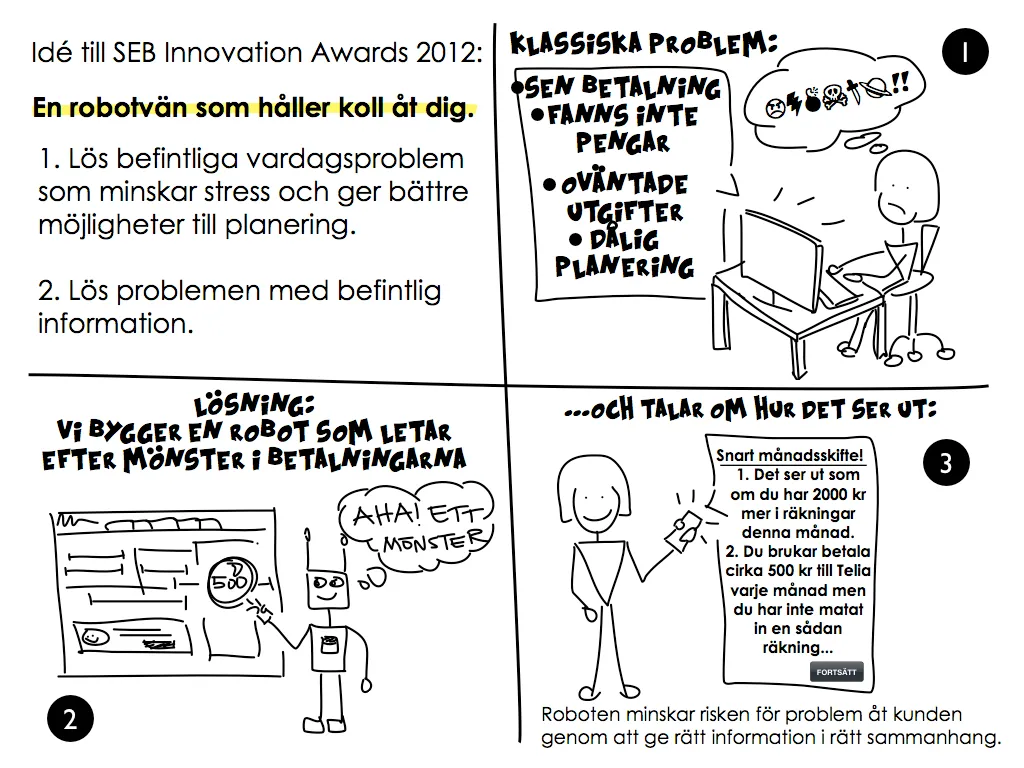
- It came as companies were starting to take part in online conversations in earnest – SEB, for example, had responded to my blog post about their internet bank.